An FOI request by a concerned motorcyclist has revealed Kingston Council didn’t recuperate the costs from contractors, leaving taxpayers to bear the brunt
Jon Strong, from Tolworth, began investigating the continuous footways on Ewell Road, Surbiton, after noticing his motorbike moved unpredictably when he turned off at a junction.
Continuous footways are widely present around the Kingston Borough, after being implemented alongside cycleways in 2020. They are areas of pavement which stretch across junctions and sideroads and are therefore shared spaces for both pedestrians and vehicles.
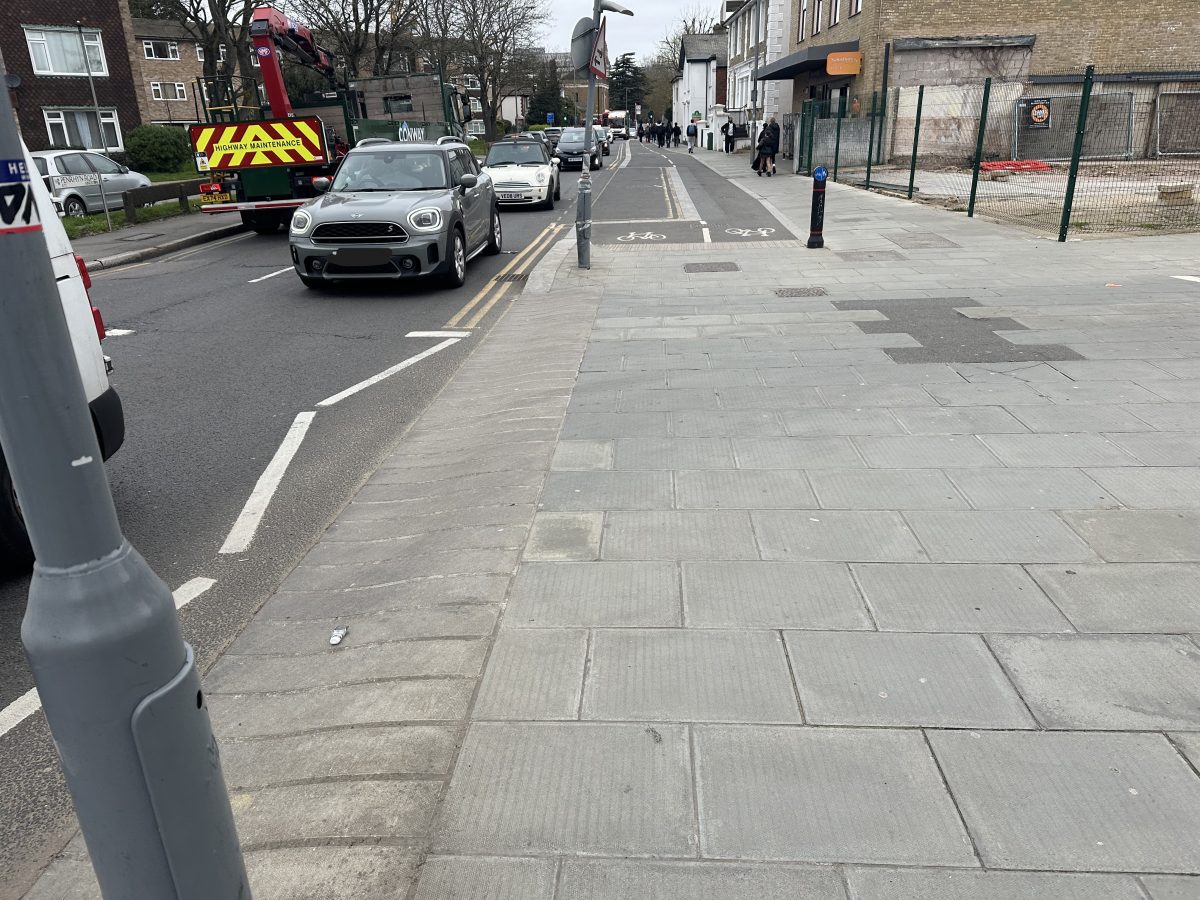
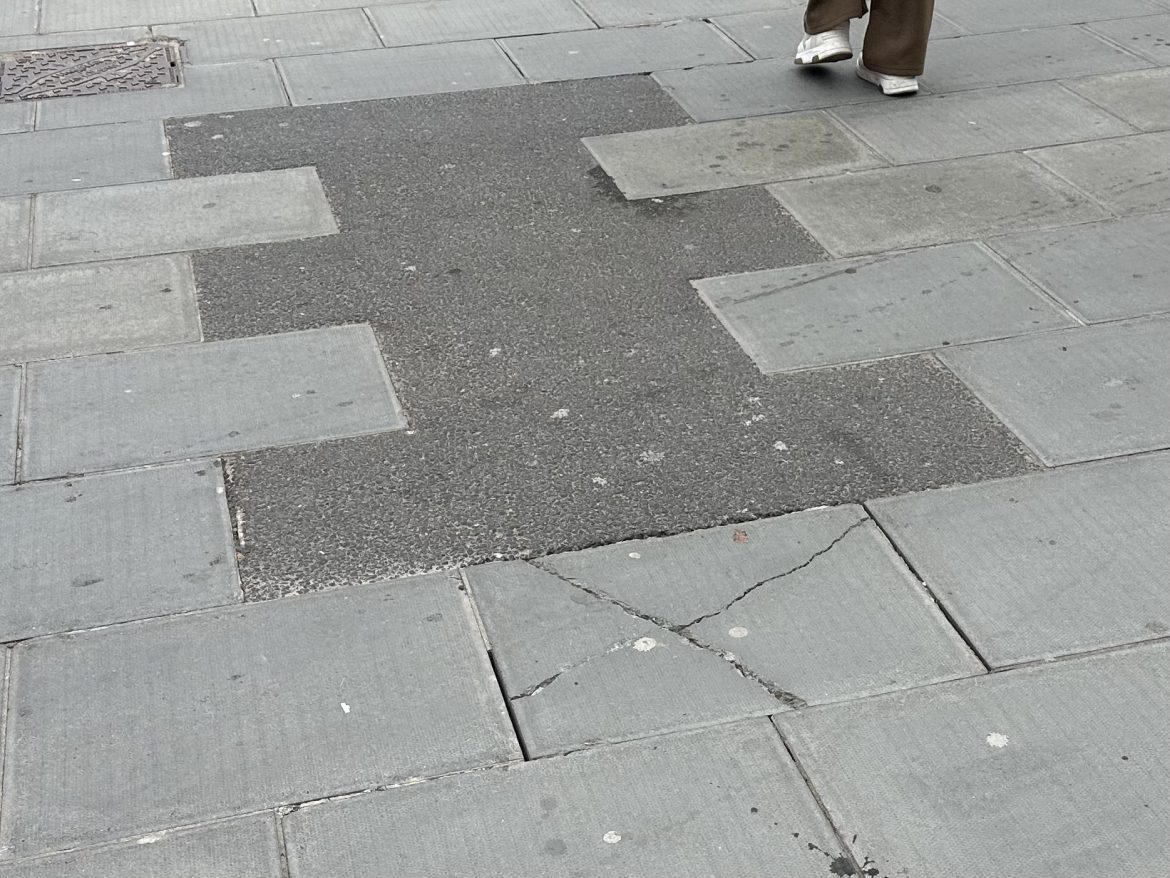
Strong noticed many of the surfaces on the footways along Ewell Road had been patched up with tarmac. He submitted an FOI request to Kingston Borough Council about the issue, which revealed they were being repaired, less than three years after their implementation, at a cost of £420,000.
The 64-year-old said the problem appeared to stem from using paving stones on pathways both pedestrians and vehicles use.
He said: “They put paving stones over the pavement on the continuous footways, and then they got broken up because cars and lorries and buses were going over them.”
Strong noted the London Cycling Design Standards (LCDS) advises against the use of paving slabs for cycleways, because they create the risk of “rocking and tripping”, meaning they can come loose and wobble under added weight, making them unstable and potentially dangerous surfaces for cycling.
He said: “Why would a competent engineer put something that causes a risk of rocking and tripping with something as low weight as a cycle as a surface that cars, buses and heavy vehicles are going to go over?”
Kingston Council said it didn’t recuperate the costs from the contractor, claiming the contractor was not at fault.
In response to the issue at Ewell Road, Kingston Council said: “The works were undertaken to address issues with the paving and to improve the design and safety of the continuous footways, drawing on experience from this and other sites.
“The paving failure could not be directly attributed to the contractor, and it was therefore not considered appropriate to seek recompense.
“The revised design and layout were developed by experienced and skilled consultants, and the council will continue to monitor safety data relating to the scheme.”
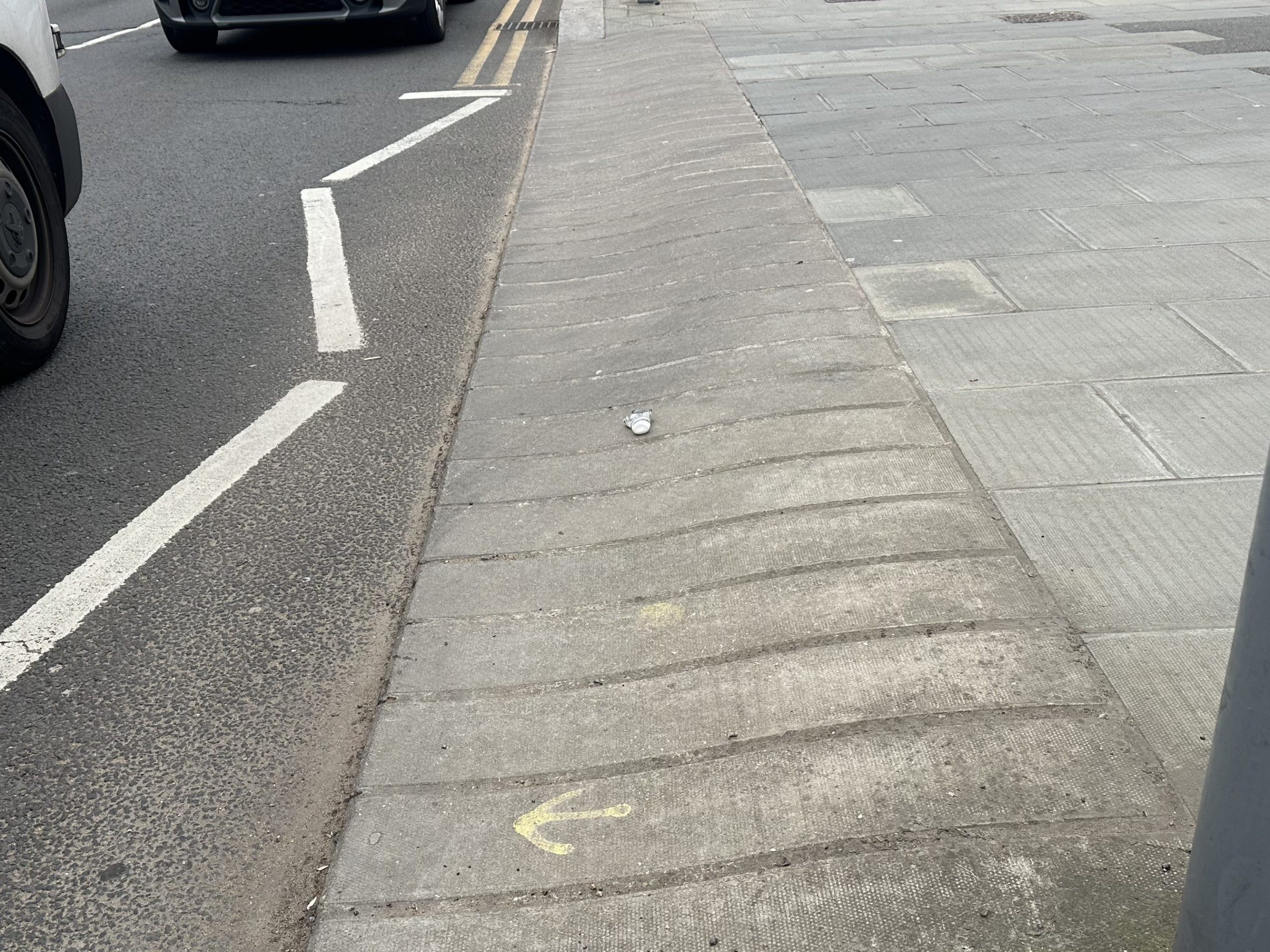
Strong is taking his investigations into continuous footways further. Vehicles that enter a main road from a continuous footway move off on a ‘sinusoidal’ slope – a slope which has a continuously changing gradient. He says this is dangerous for motorcycles as it requires constant adjustment to manoeuvre off safely.
The motorcyclist has also started conducting a statistical investigation into the safety of sinusoidal junctions across London after finding traffic-related deaths on Ewell Road had doubled since the implementation of the junctions, from two to four.
While he acknowledges this is a statistically insignificant result, Strong claimed to have found that deaths and serious injuries had risen in areas where the junctions had been implemented, in a survey of 250 continuous footway junctions across London.
Sinusoidal junctions were intended to be implemented ‘experimentally’, according to LCDS – meaning specific data related to the junctions was supposed to be collected by councils to establish their safety. However, another FOI request conducted by Strong revealed no such data had been collected.