Last chance to see Kingston Glamour: Art, Innovation and the Suburbs before it closes in January
There are only a few weeks left to see Kingston Museum’s big exhibition of the year, Kingston Glamour, which has been quietly retelling the borough’s 20th-century history through race cars, roadhouses, and fashion.
And as you might hope, the feel of the whole exhibition is suitably glamorous.
Stepping into the gallery, you are met with deep green walls, soft spotlights, and neat glass cases holding cosmetics and adverts. At first glance, the room feels more like a stylish showroom than a local history display, demonstrating the exhibition’s point about Kingston’s taste for modernity and style.
The exhibition covers the 1920s to 1970s, moving from early motoring and aviation to modern furniture, department-store fashion and cosmetics. Even with a broad mix of decades, the exhibition flows easily.
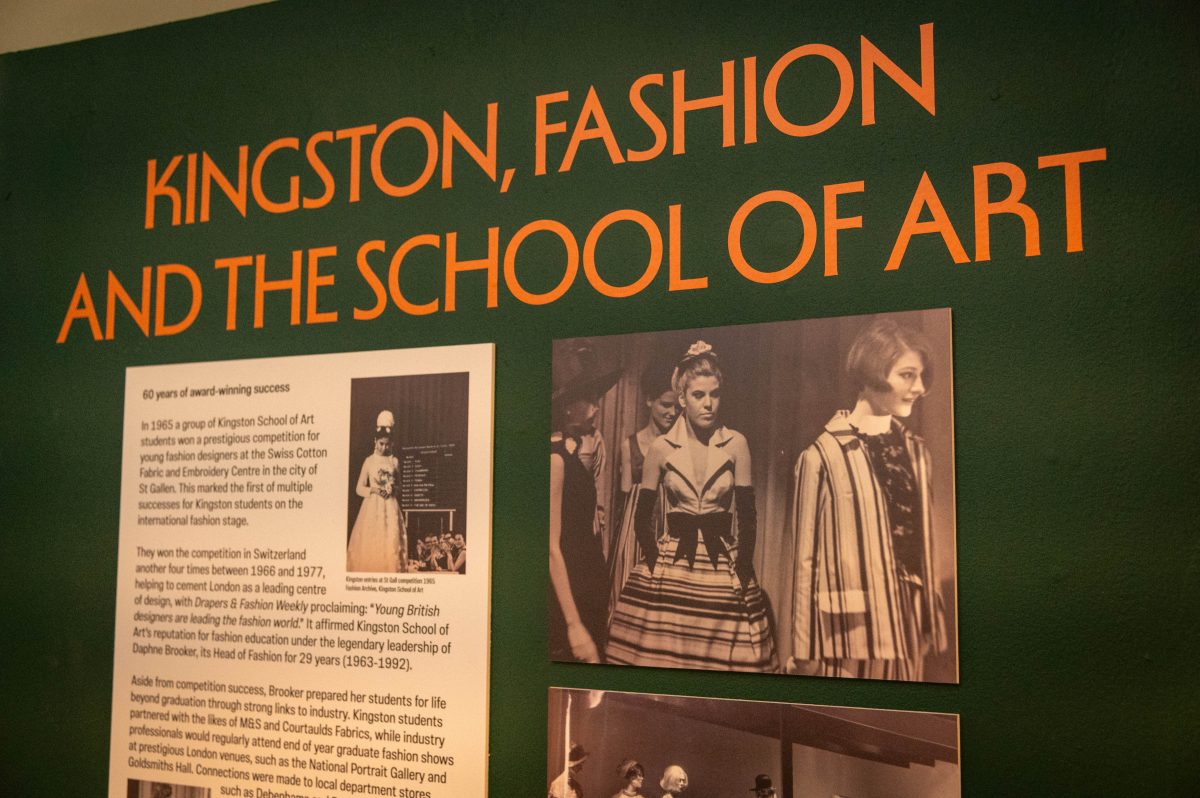
Section titles like “Glamorous Construction”, “Young Makeup, Shake-Up” and “Kingston, Fashion and the School of Art” gives a clear sense of the show and the story it wants to tell without making it feel too fragmented.
The Ace of Spades roadhouse gets pride of place early on with its Tudor-style charm and clean lines of Art Deco. With the rise of vehicle ownership among the wealthy, roadhouses started to appear in the 1930s, turning the roads out of London into a hotspot for nightlife. The Ace of Spades became one of the most glamorous, a pit stop for nightlife on the Kingston Bypass.
Black-and-white photographs show rally drivers about to set out from the club and evening guests posing by the “roadhouse” pool, while the labels tell a story about this luxurious stop, where guests could enjoy cabaret, swimming and the opportunity to escape from it all via the roadhouse airstrip. It reframes the Kingston Bypass as something more cinematic than just a road you drive past.
A section of this part of the exhibition is dedicated to racing driver and car designer John Cooper, later co-founder of the Mini Cooper.
From here, the exhibition moves indoors.
There is a section dedicated to furniture designer Betty Joel with sepia portraits and photographs of bedrooms, cocktail cabinets, and fashionable wardrobes. The display is heavy on photographs, carefully chosen to give you a strong sense of the lifestyle her work was built around.
Joel’s work, aimed at busy, well-heeled households in the borough, suggested that the ideal home was modern, tidy, and quietly classy. The idea of glamour in her work was more domesticated and controlled, less about sparkle – more about looking put-together.
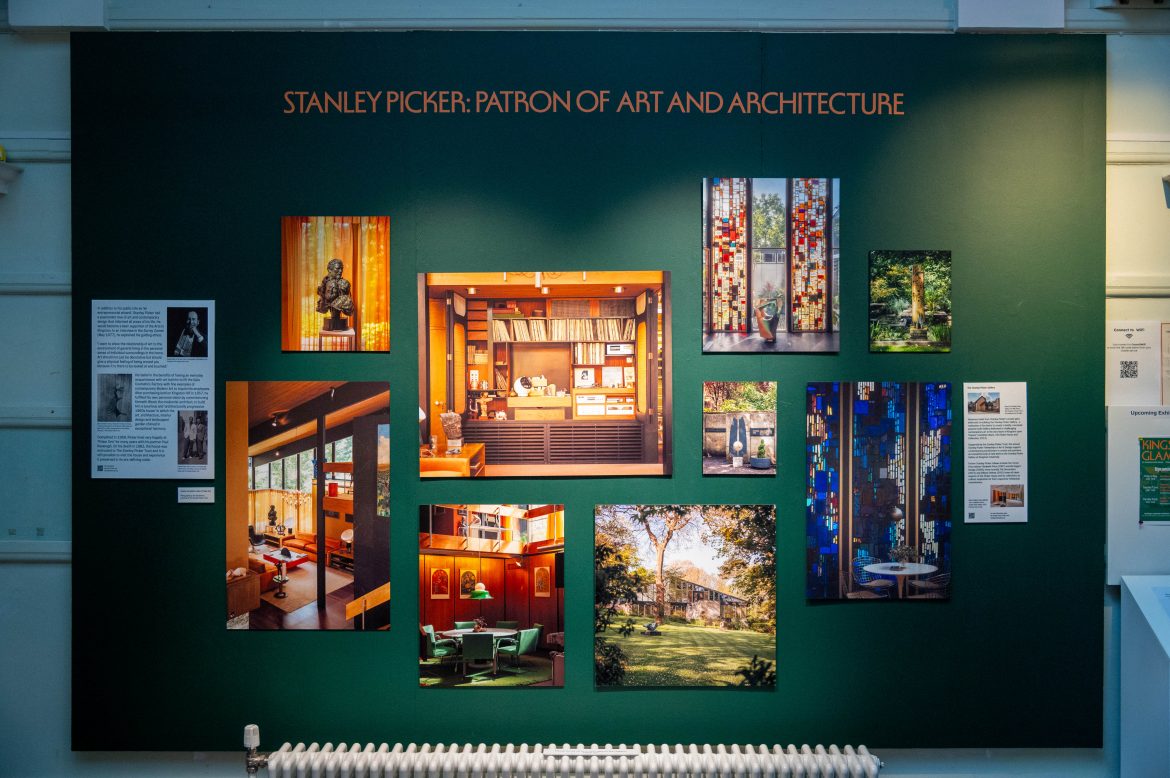
On the opposite wall, photographs from Stanley Picker’s modernist house are equally elegant with stained glass, clean landscaping, and art all around. He pushed that idea further, turning the suburban house into a stage where taste is much more on display.
Picker was a local businessman with big influence on Kingston’s mid-century style, and it was his cosmetic company that developed some of the most iconic British brands of the era, including Gala and Miners.
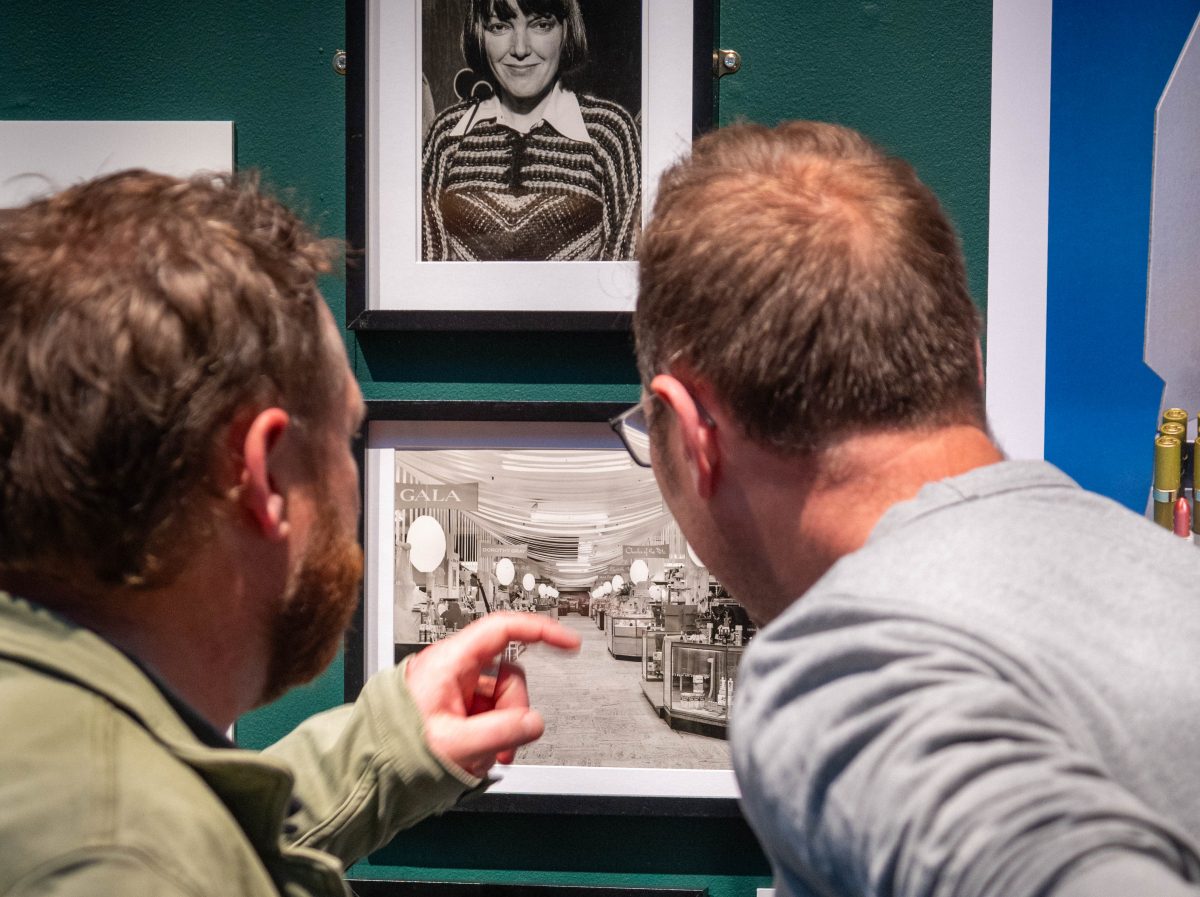
In Glamour, we see just a few items like Mary Quant’s daisy logo compacts, waterproof mascara, and hinged perfume rings, which sit in a vitrine in front of the “Young Makeup, Shake-Up” section.
There is a wallpaper of 1960s adverts for brands like Gala and Miners, adding a burst of colour. It makes the beauty section feel like you have stepped into a mid-century cosmetics shop.
“Gala is a girl like you” is repeated all across the wallpaper artwork, showcasing their provocative adverts and underlining how make-up was sold as a lifestyle as much as a product.
Elsewhere, a tiny Mary Quant Daisy Doll table lets younger visitors design outfits of their own. It’s a simple, playful touch that fits the youth-focused energy of the section and makes the exhibition feel more interactive.
But it is when you reach the dresses that the exhibition starts to feel more real. Up to that point, most of what you see are photographs, posters, and packaging, but here you see clothes that Kingston women wore. As a viewer, it marks a shift in the exhibition, as it starts to feel exciting and a little emotional, because you can imagine the lives behind the glamorous dresses.
Several garments are accompanied by comments from the Refugee Action Kingston Sewing Group, who examined them earlier this year.
The museum partnered with the group as part of a community collaboration, bringing a contemporary hands-on perspective. The comments highlight hand-stitched seams, umbrella-shaped skirt patterns, and the fact that a vintage size 14 would not fit most size-14 shoppers now. Suddenly, the dresses feel less like one-offs and more like garments real women wore, and which were altered and squeezed into.
It is a fitting end to a stylish exhibition, which makes a strong case for Kingston as a place where glamour lived. For a relatively compact gallery, the exhibition manages to connect nightlife, design, shopping, and beauty into one local story.
Visitors who want to go deeper into one of the most elegant sections of the exhibition can catch Finding Betty Joel on 12 December, a talk on the designer’s life and legacy.
The free exhibition runs until 10 January at Kingston Museum, open Thursday to Saturday 10am to 5pm, closed 20 December to 2 January.