
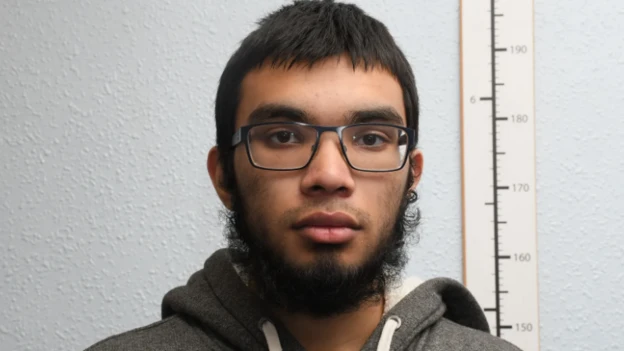
Yusuf Shah, 18, was sentenced to jail earlier this month for helping two terrorist organisations.
A teenager has been sentenced at Kingston Crown Court to four years in prison for advising two terrorist groups in cyber security and cryptocurrency.
Police first stopped Yusaf Shah at Heathrow Airport in January 2024 under Schedule 7 of the Terrorism Act. Analysis of his mobile phone and computer showed that he was in contact with terrorist groups on social media.
Shah was convicted of advising terror groups on cybersecurity and on how to avoid detection when using cryptocurrency. He also accessed and downloaded material on making explosive devices and carrying out terrorist attacks.
Following Shah’s sentencing, Commander Helen Flanagan, head of Counter Terrorism Policing (CTP) London, said: “This case should act as another warning to parents and carers to be aware of what their children are doing online.”
Shah used the Telegram app to engage in group chats supporting terrorist organisations. He shared the group’s violent ideology and offered to give them technical support.
In March 2024, he was approached on the app to help produce a cybersecurity guide for Tehrik-e-Taliban (TTP), a terrorist organisation operating along the Afghanistan-Pakistan border. He produced a guide, knowing that a senior official within TTP had requested it.
Shah also advised on untraceable cryptocurrency. In April 2024, a donation of $1,376.51 was made to Al Qaida via a QR code created according to the instructions Shah gave.
Shah was 16 at the time of the offences.
After a five-week trial in July this year, Shah was convicted of entering into or becoming concerned in an arrangement to make money available to a terrorist organisation. He was found guilty of teaching or training a person, knowing that this person would use his instructions for terrorist activities.
Finally, he was convicted of three counts of collecting terrorist materials.
Shah was sentenced to four years and two months in prison. He was also given a 10-year notification order.
“Our investigation showed that Shah was being drawn into extremist and terrorist material and ideologies when he was only 13 or 14 years old. This is reflective of a growing trend of young people being radicalised and accessing extremely dangerous and violent terrorist ideologies and material online,” said Flanagan.
The latest data from Prevent, the government’s early intervention and safeguarding programme designed to reduce the risk of radicalisation, shows an increase in the number of teenagers referred to the scheme in 2025.
Teenagers aged 11 to 15 represent the largest group referred to Prevent. This age group also has the highest proportion of individuals who then volunteer for the multi-agency safeguarding programme called Channel.
According to the Home Office, the rise can be partly explained by an increased awareness of Prevent in the aftermath of the Southport stabbings in July 2024.
Flanagan said: “It is vital that parents and carers are aware of what children are doing on the internet, especially if they are accessing social media platforms. I would implore you to have conversations, to be inquisitive about what your children are doing online, and if you have any concerns, then there is help available to you via the ACT Early website.”