
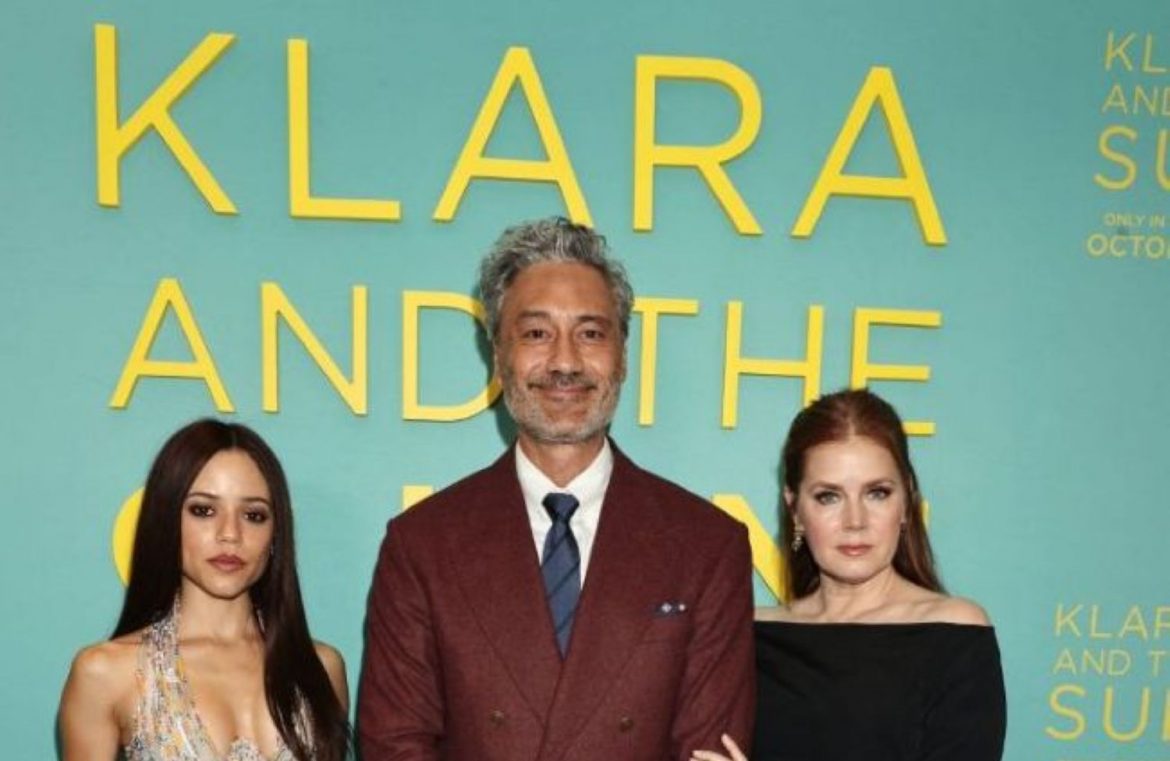
The Oscar-winning director continues his rocky run with an unbalanced adaptation of Kazuo Ishiguro’s bestselling 2021 novel.
Several of celebrated author Kazuo Ishiguro’s novels have been adapted for the screen to starry acclaim. The Remains of the Day (1993) received 8 Academy Award nominations, and Never Let Me Go (2010) had an all-star cast, including Andrew Garfield and Keira Knightley.
Both stories explored emotion through an abstract lens, with this latest adaptation, Klara and the Sun, continuing that trend within the themes of humanity and loss.
Director Taika Waititi is best known for his unique style of comedy, showcased in Thor: Ragnarok (2017) and Jojo Rabbit (2019), the latter of which won him the Academy Award for Best Adapted Screenplay.
Unfortunately, since these triumphs, his trademark humour has arguably become a weakness. Two of his later films, Thor: Love and Thunder (2022) and Next Goal Wins (2023), received a less than favourable critical response.
The question going into Klara and the Sun, a more serious proposition, was whether it would mark a return to form for the New Zealand director, or provide another example of his comedy getting in the way of a potentially compelling story.
This science-fiction comedy follows a robot named Klara (Jenna Ortega), an AF (Artificial Friend) who is loveable and witty, with a primary purpose of looking after her human companion. Klara (Ortega) believes the sun holds answers to all the world’s problems.
Ortega, best known for darker roles such as Wednesday Addams in the Netflix series Wednesday, brings a playful energy to the character. Her performance also requires physical comedy, from Klara’s unusual running style to her tendency to stand on one foot. These quirks give the character a distinctive charm, although the film’s broader approach to comedy is less consistently successful.
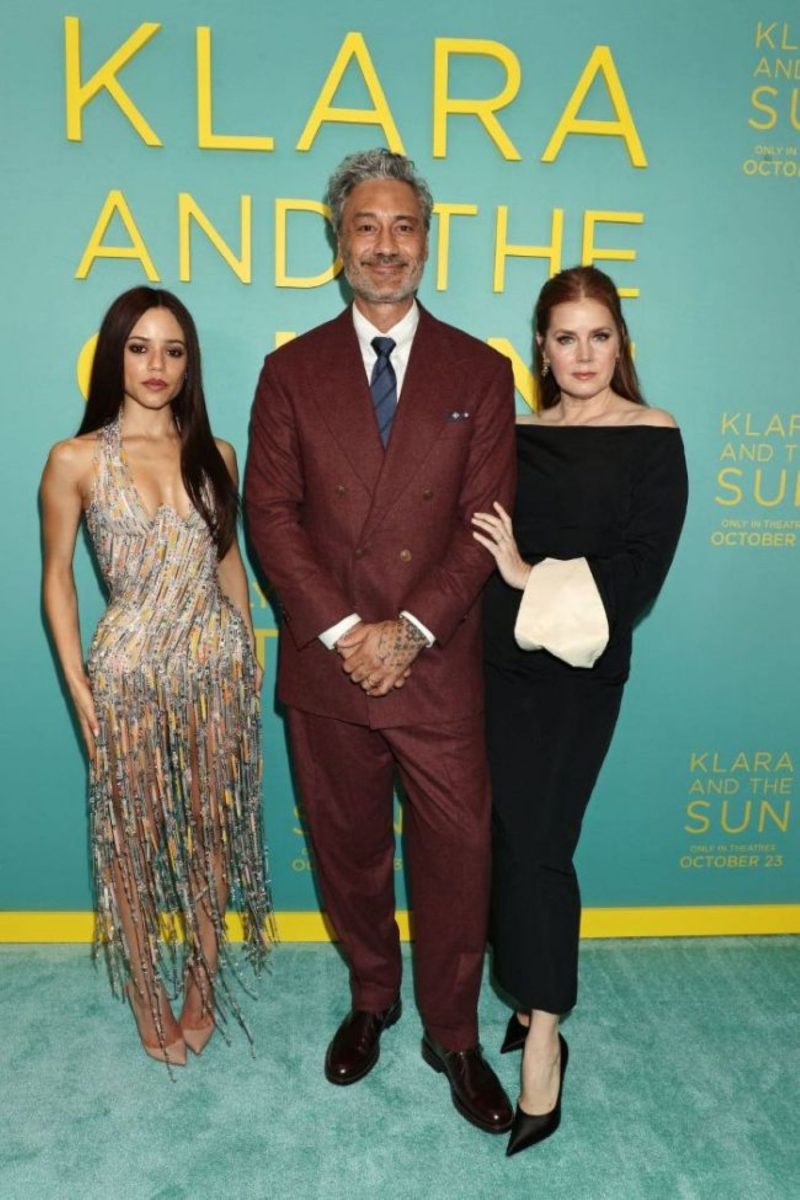
Image credit: Nancy Kaszerman/ZUMA Press Wire
We first meet Klara in a shop filled with AFs. Klara’s best chance of finding a new home is when the store’s manager (Natasha Lyonne) gives each AF three days at the window before rotating them around the shop.
Klara finally meets her new family, the mother (Amy Adams) and her teenage daughter Josie (Mia Tharia), who is characterised by being vaguely but seriously ill.
Adams delivers a frustrating performance, lacking the playful energy Ortega brings to Klara. At times, it feels as though she belongs in a different film, portraying a seriousness that sits awkwardly alongside the AF’s more whimsical world.
Tharia, meanwhile, holds her own in her first major Hollywood role, developing a convincing relationship with Ortega that at times gives the film some moving moments. Their relationship offers an opportunity to explore friendship, human connection, and the role artificial companions might play in lives.
The family is full of past grief, embodied by the loss of Josie’s sister, which is a tragedy revealed in a blunt exchange from Josie to Klara, “This is my sister’s room, she’s dead.” This delivery is characteristic of Waititi’s style, using humour and bluntness to approach a painful subject, something he did amazingly in Jojo Rabbit. From this, we begin to see the emotional damage Josie carries with her.
Josie’s illness is linked to a procedure known as being “lifted”, which enhances intelligence but comes at a serious physical cost. The procedure has affected not only her health, but also her relationships, particularly with her mother. Their strained dynamic becomes apparent during a tense dinner table exchange in which Klara ends up in the middle of. There is plenty of dramatic potential here, but the film struggles to find this consistent balance.
The film’s treatment of Josie’s family feels less complex than Ishiguro’s novel. In the book, the mother’s grief over the death of her eldest daughter is closely connected to her desperation to secure Josie’s future. By simplifying aspects of this family history, the adaptation loses some of the emotion of the book.
Ortega’s performance was arguably the best element of this adaptation, and the film’s exploration of illness, grief and human connection provides it with a solid foundation. However, what should have been a moving exploration of the relationship between humanity and artificial intelligence feels more like an adaptation that never quite captures the emotional depth of its source material.
Unfortunately, Waititi’s Klara and the Sun does little to reverse the director’s recent decline, only just managing to lean towards a compelling and emotional story rather than descending into complete silliness.