The Learn to Grow initiative comes as the government urges households to be ready for an emergency event.
With Prime Minister Andy Burnham’s latest advice to UK householders urging them to stock up on tinned food and bottled water, alongside the launch of the Government’s Be Ready campaign earlier this month, worries about the stability of Britain’s food supply in the event of an emergency are increasing.
Projects like Kingston Save the World Charity’s Learn to Grow are taking a community-based approach to food uncertainty and rising food costs.
Run by Roland Lawrence, a London Parks Ranger, and Dr Tariq Shabeer, a climate change specialist, the project encourages a return to the land by teaching local people to grow their own food.
Tariq said: “Certainly in the war, all that generation was taught to dig for Britain and grow your own. We couldn’t get the food from outside.
“It could happen again. They’re talking about… food shortages. How are people going to eat? They’re not going to be able to afford the tomatoes and the fresh food. They’re going to buy the pasta and the long-life food, and they won’t buy strawberries. They won’t buy the fresh vegetables.”
The Learn to Grow programme runs until January 2028, working across two sites.
The first is the Chalice Garden, located at the Save the World Club, 18 Southsea Road. It is a small garden area with raised vegetable boxes built by Roland, with sessions running on Thursday afternoons, 2-4 pm.
The second is at Knollmead Allotments, Tolworth. Sessions here run on a Sunday afternoon, also from 2-4 pm, working in the charity’s 6,000 square foot orchard, which is home to apple, pear, and plum trees, and an enormous red mulberry tree.
The main aims of Learn to Grow are to teach people how to identify plants and grow their own, understand which plants can be grown, and share cooking skills that will promote healthy and nutritious eating.
The project’s long-term goal is not only to reduce reliance on supermarkets through community gardening, but also to help people build the confidence to find and use spaces for their own food production and become more self-sufficient.
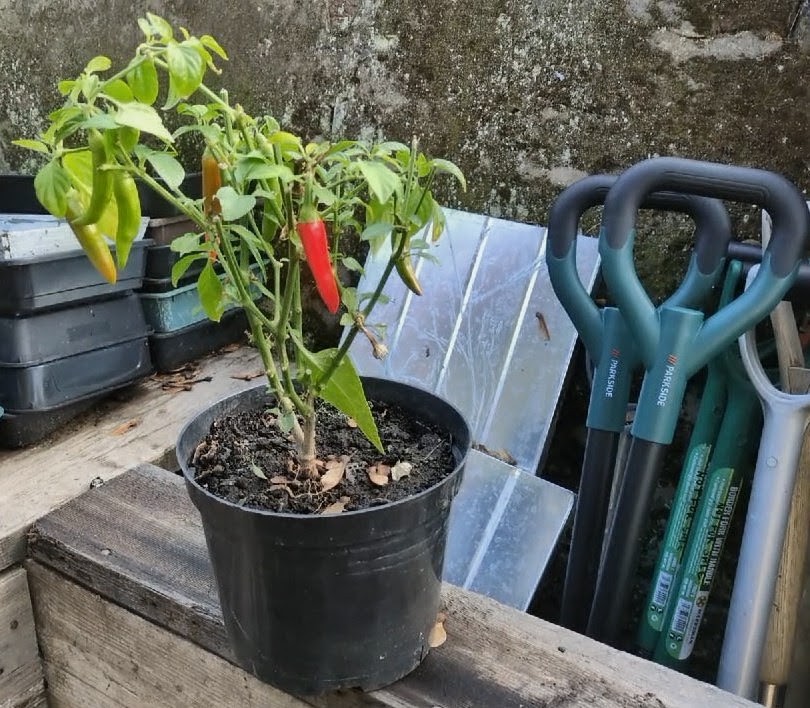
Tariq wants people to know that you can learn to grow anywhere. “You can grow on your kitchen shelf, outside your flat or house, up the wall,” he said.
“If there is a derelict bit of land, approach the council, work with Roland and me. You don’t have to be embarrassed not knowing anything. We’ll share the sunflowers, share the tomatoes. We’ll show you how to grow them.”
“It sets people up for not just this year, but for the rest of their life,” he added.