A survey by the Office for National Statistics suggests a fall in interest in environmental issues
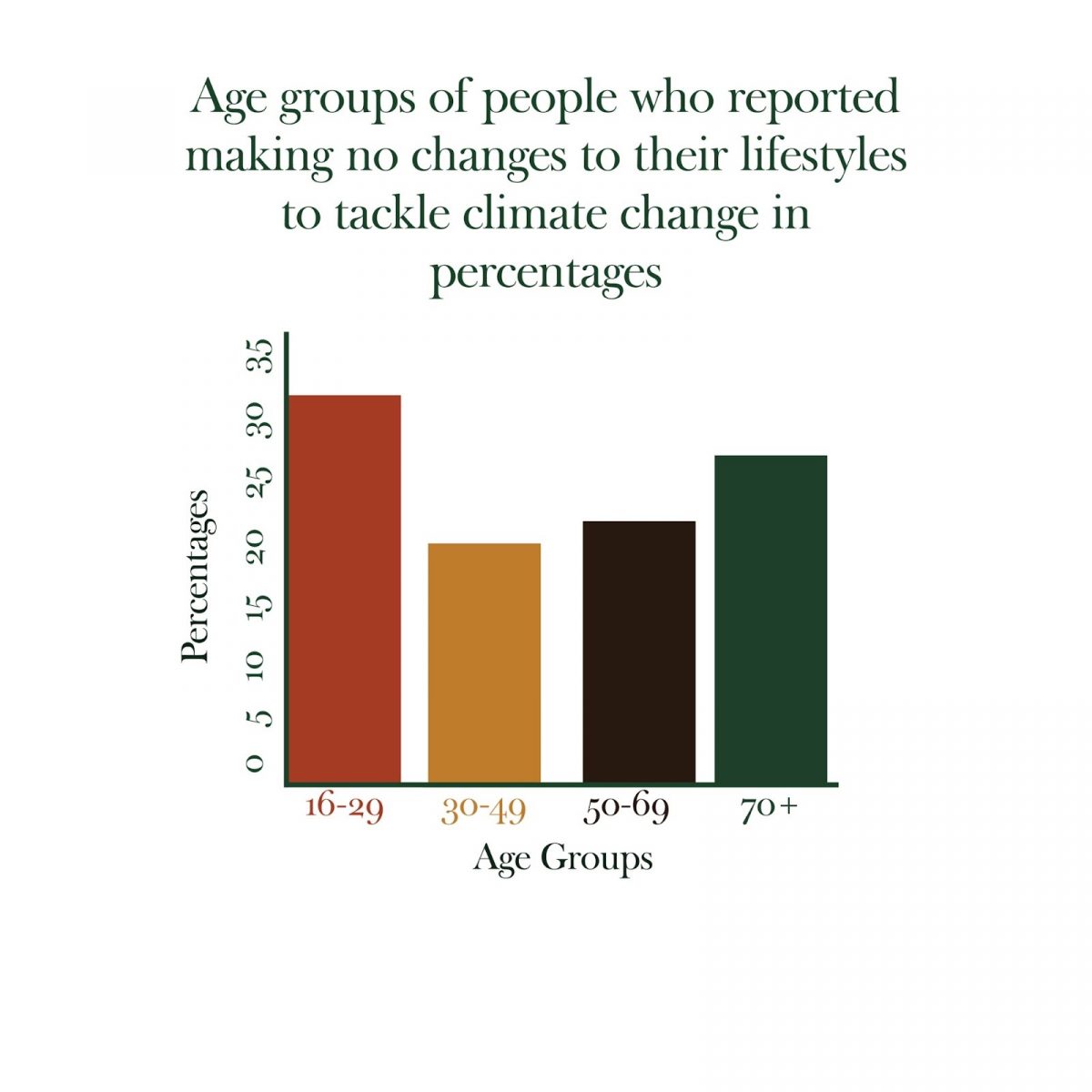
A survey conducted by the Office for National Statistics (ONS) UK has revealed that 31% of people aged 16 to 29 have not made any changes to their lifestyle to combat climate change.
Those surveyed said they believed any lifestyle changes would have no impact on climate change. They also said they didn’t know how to make any changes.
The survey, which used stratified and random sampling to obtain the data, found that 35 per cent of 16-29 year olds who did not make any changes expected large polluters to make the change before them.
Young people may already be doing more than previous generations to go green, according to climate researchers.
“I suspect green behaviour is much more baked into younger lives, such as no longer wanting to own a car, than might be evident,” said Damon Hart-Davis of the University of Surrey Centre for Environment and Sustainability. “I think that many are well aware and may not have so many changes to make, having avoided some of the most climate-unfriendly habits from the start.”
Hart-Davis said that young people may possibly not realise that they had already made climate-conscious changes to their daily lives, such as using reusable food shop bags, non-plastic straws at coffee shops, and driving less.
Older age groups may be more aware of adjustments they had to make.
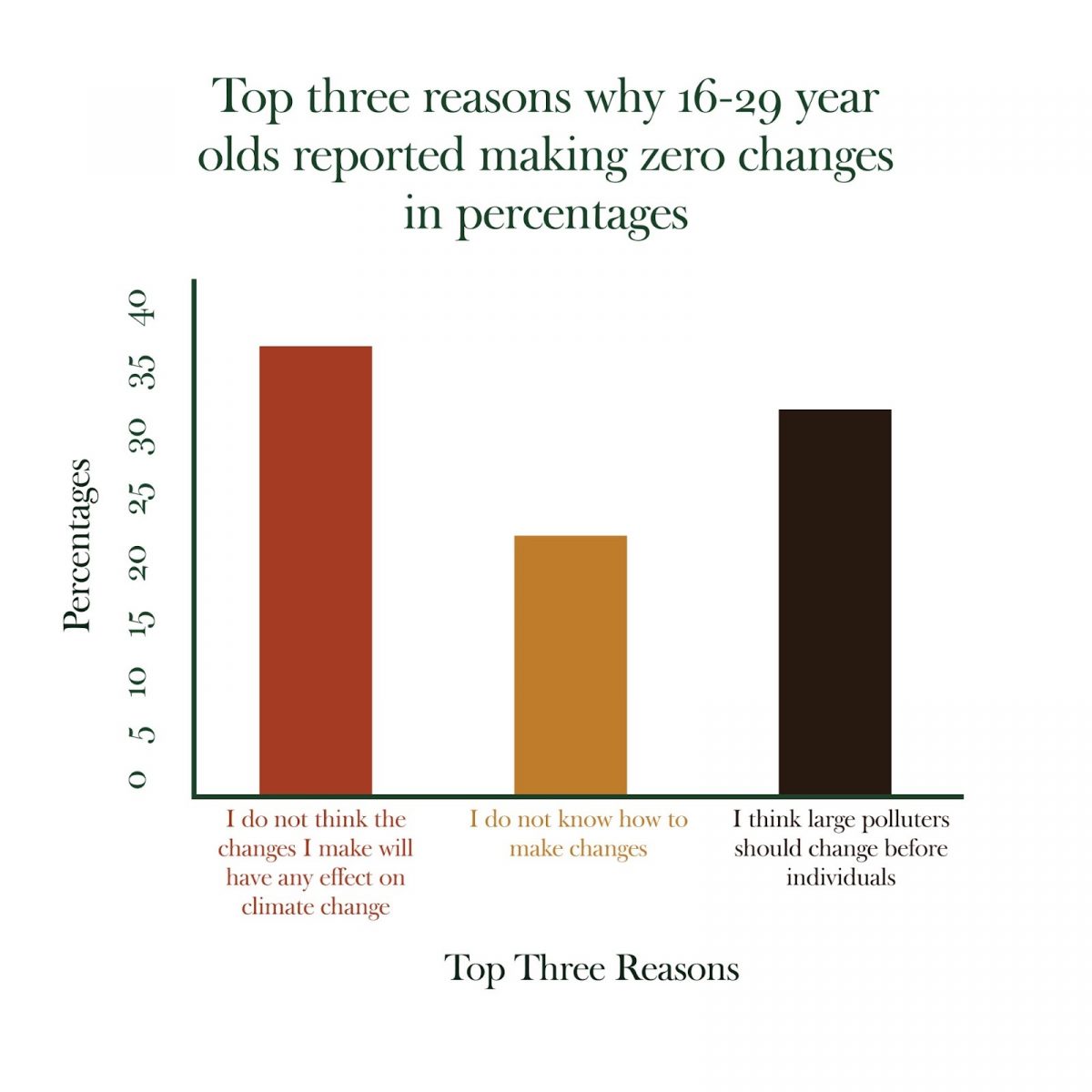
According to the ONS study, the third highest reason for not making changes was simply not knowing how.
Marilyn Mason from Transition Town Kingston, a local environmental group that focuses on sustainable living and reducing carbon emissions, said small changes were possible.
“It’s worth remembering that, even if big corporations and our governments don’t do nearly enough, there are things that individuals can do that make a difference and the more of us that do them the more difference they make,” Mason said.
Mason recommended that all young people of voting age should vote for candidates that are campaigning for the environment and are safeguarding younger generations’ future.
At home, she advised eating less meat and other animal products and replacing these parts of your diet with plant-based alternatives.
Mason said: “These can help to reduce the deforestation and methane emissions caused by livestock farming. Reducing fossil fuel use by cycling, using public transport, switching off appliances and lights, turning down the heating, and more generally, consuming, wasting, and throwing away less – food, clothes, gadgets – are worthwhile for environmental reasons and will probably save you money too.”
Her final recommendation is to reduce the amount of air miles you are contributing to the environment. That includes purchasing products that have to fly from international countries to the UK.
In Kingston, there are multiple local shops that can provide alternatives for young people who want to follow Mason’s advice. Sage’s Health Store in Surbiton provides zero-waste bulk food and eco-friendly household products. In Teddington, Refill Larder provides package-free foods, cleaning supplies, and bathroom products. River+Park is a local and online service that provides zero-waste alternatives for daily household items.
“Although you may feel that anything you do makes little or no difference, you will not be alone in taking these actions and thousands of individuals changing their behaviour and life-styles, independently or communally, can make a difference,” Mason said. “So don’t give up, it’s your future on the line.”