
The new LP from Damon Albarn’s cartoon band will please fans. But to break the mould, Gorillaz need an animated ego death.
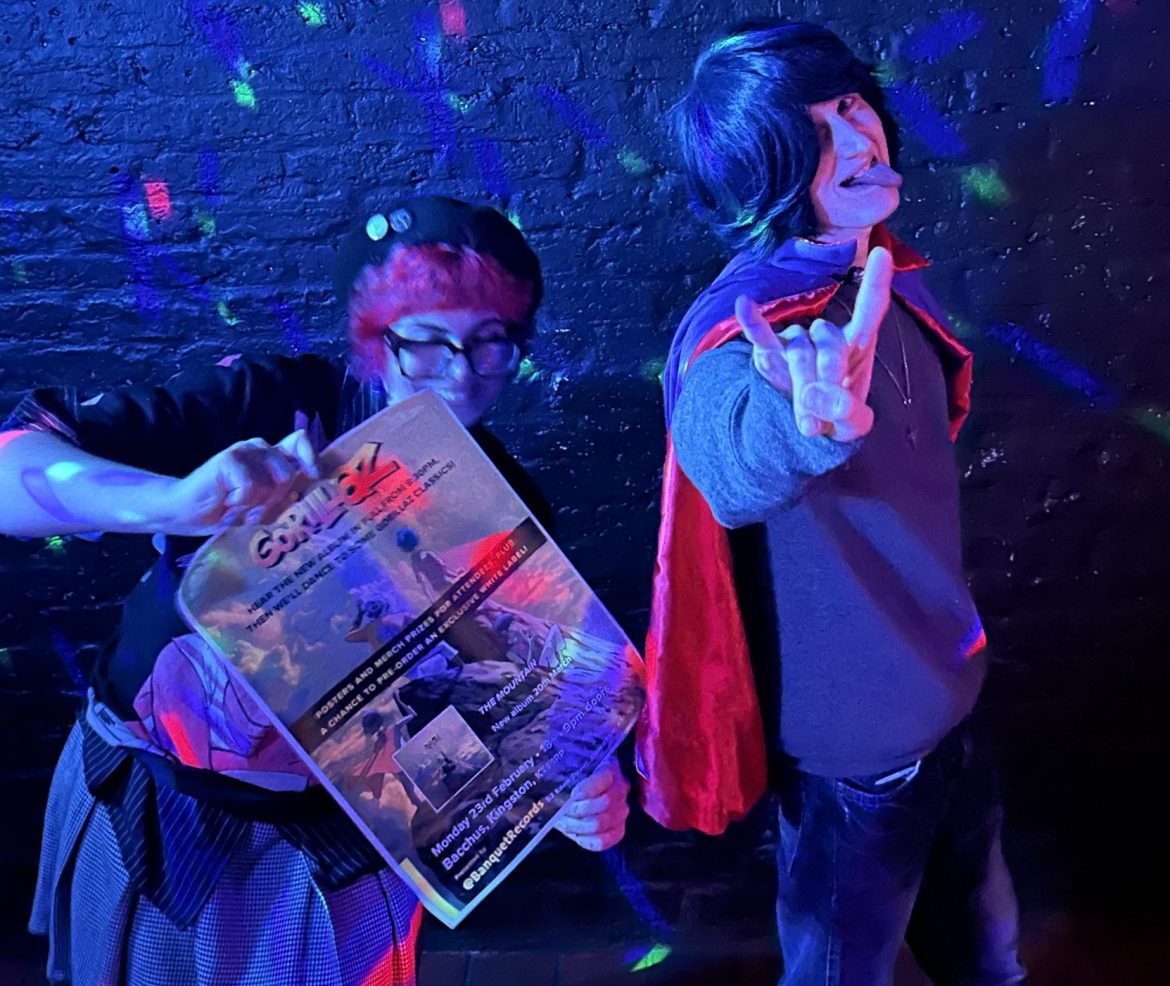
Last Monday on 23rd of February, I attended a listening party for the new Gorillaz album ‘The Mountain’ hosted by Banquet Records at legendary local late-night venue Bacchus.
Gorillaz are a virtual band formed in 1998 by Blur frontman Damon Albarn with cartoon illustrator Jamie Hewlett. The band has four members, all animated primates, and frequently collaborates with an eclectic repertoire of artists from across the world. The nature of Gorillaz as a virtual band made the album uniquely suited to the listening party experience.
The band evidently attracts a diverse range of fans – I spoke to 21-year-old Zaydan Raffai, and 71-year-old Richard Linton while queuing, for instance. Upon entry attendants were handed a piece of Gorillaz album art and a raffle ticket for a chance to win exclusive merchandise.
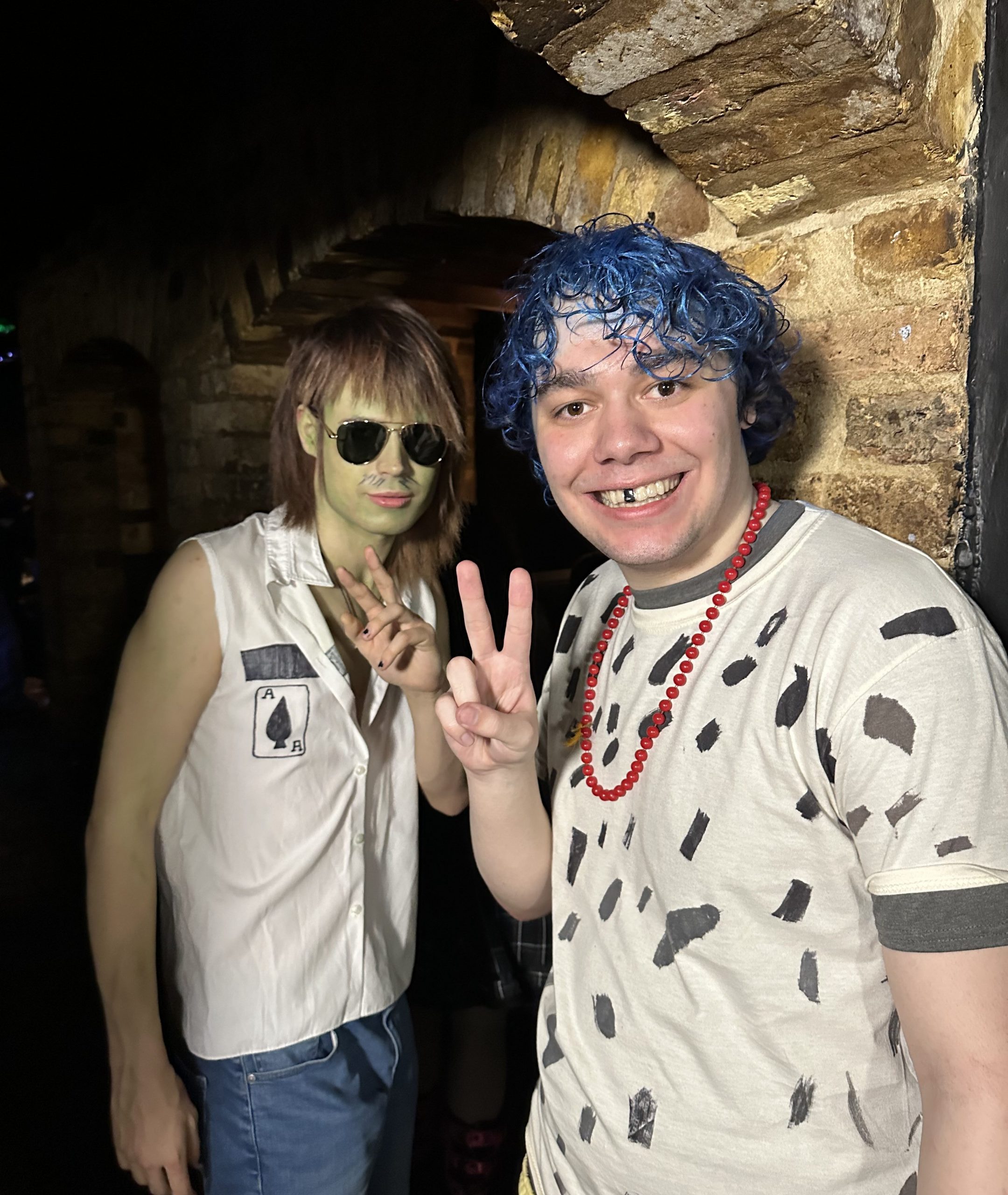
Inside fans dedicated themselves to the spirit of the evening, dressing up as Gorillaz bandmates, with neon dyed hair and fake missing teeth. I grabbed a drink and waited with Raffai for the music to begin.
The album opens with title track ‘The Mountain’ – an enchanting and hypnotic Eastern-style woodwind instrumental. Thoughts of arriving at a mountain-top temple after a long climb set the scene for the listening experience.
The pan flute ballad is followed by the second track ‘The Moon Cave’, a recognisably Gorillaz song, with 2-D’s (Damon Albarn’s animated alter ego) distant and melancholic vocals seamlessly dubbed over a funky electropop beat. On the feature list are the late legendary soul singer-songwriter and guitarist Bobby Womack and 81-year-old Indian musician Asha Puthli.
Throughout the album one must be highly attuned to the music to spot the precise input of each accredited musician, especially with the distortions layered onto their tracks.
Many of the artists are featured posthumously, and their inputs seem to have been pulled from Albarn’s immense archive collected over his extensive career.
Next, however, is ‘The Happy Dictator’ where Sparks’s presence on the track is more than obvious. The song is a bright and vibrant 80s-style dance tune with clean and modern production, which got the crowd at Bacchus moving.
After that is ‘The Hardest Thing’. The song reads as a tribute to Allen, a long-term collaborator of Albarn who died in 2020. Albarn sings “the hardest thing is to say goodbye” over a climbing bassline, ultimately reaching crescendo to an orchestra of brass synths.
The transition into ‘Orange County’ is seamless. The song is, again, classically Gorillaz – a pleasant and easy-to-listen-to whimsical tune with lo-fi vocals over a playful, whistled melody.
Such is the sonic range of Gorillaz music. The sixth track ‘The God of Lying’, a wispy, electronic ska tune with raw vocal delivery from IDLES frontman Joe Talbot, is also distinctively attributable to the band, harking back stylistically to tracks like Rhinestone Eyes on seminal Gorillaz album Plastic Beach.
When we reached track seven ‘The Empty Dream Machine’, Raffai and I were so blinded by our anticipation for a coming Johnny Marr guitar solo, that I forgot to write any notes about the song itself. There was no solo in the end, so we concluded Johnny Marr was playing the sitar throughout.
‘The Manifesto’ follows, and at over seven minutes long it boasts a range of influences. Immediately we are hit with an Indian-style entrancing drum beat, but our expectations are promptly subverted with Spanish lyrics from reggaeton artist Trueno. Then there is a Southeast Asian section, over 2-D’s drowned-out vocals. After, we are hit with a hip-hop section led by rapper Proof, over increasingly disjointed and synthetic instrumentation. Overall, the song is not entirely cohesive with its clearly distinct sections – to the point that I lost my place on the track list as I thought the next song had begun – but it does not feel out of place within the context of the album.
The pace slows with stripped down lo-fi tune ‘The Plastic Guru’, which has soft vocals from Albarn, accompanied by a backing choir over undulating synth keys. The over-optimism of the choir comes across as a little cheesy, but this is likely part of Albarn’s conceptual intention.
While ‘The Plastic Guru’ was not a highlight of the album for me, the next track ‘Delirium’ was my favourite. A fresh and abrasive dance tune, it felt like Albarn had bottled serotonin and released it sonically into Bacchus. Mark E. Smith of ‘The Fall’s’ posthumous chorus shouts off “Delirium!” over a chaotic arrangement of synths which are delivered with the ambiguous punch only Mr Mark Smith can muster, which pleased me as a long-term fan of ‘The Fall’.
Cultures collide once again on track 11 ‘Damascus’. Legendary New York rapper Yasiin Bey, formally known as Mos Def, spits tight bars over an Arabian beat, interspliced with powerful and emotive singing from 60-year-old Syrian artist Omar Souleyman. The song has a quick tempo and jams is enough to satisfy any distractible mind. It’s a head-bopper and another highlight.
‘The Shadowy Light’ is another Eastern inspired tune led by Indian artist’s Asha Bhosle warming and maternal vocals. Albarn sings over cloudy instrumentation in manner both pained and hopeful.
‘Casablanca’ is a light and airy tune with Albarn’s distant vocals married pleasantly with ethereal synths. The bassline climbs throughout, but it feels like it lacks a release. Johnny Marr is once again accredited but we are left without anything distinctive from the guitarist to hold onto. Marr’s contributions are subtle throughout, but he has the technical prowess to build the atmosphere of a song without it being immediately obvious from a first listen. Raffai, who is half Moroccan, complained the song was not Moroccan sounding enough, a fair comment given the abrasiveness of cultural influence throughout the rest of the record.
‘The Sad God’, unsurprisingly, brings the album to a melancholic end, leaving the listener to reflect on their experience. Black Thought raps over mellow instrumentation to bring the album to an end.
‘The Mountain’ is very good, it brings in a huge range of cultures, the tracks are original and diverse and the production is, as you would expect from Gorillaz, always clean enough to make the record an easy listen. It stands up to all of their releases over the last decade which are, consistently, very good.
However, it is difficult for Gorillaz to blow away expectations. The plus side of being a cartoon band is the ability to experiment sonically with a huge range of influences, instrumentation and collaborations, but keeping cohesion with their catalogue leaves their music little emotionally stunted. What holds together Gorillaz’ discography is a commitment to a sort of ‘hedonistic melancholy’ as the dominant emotion, played over an electric bass. Breaking this formula, however, means destroying the deliberately flat and cartoonish personalities of its members, an act that would mean the end of the band itself.